
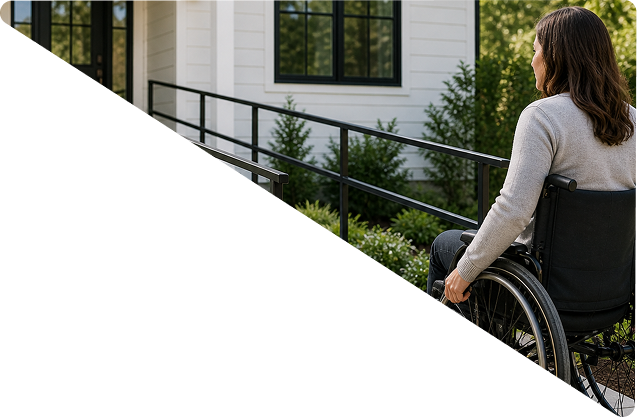

Home accessibility modifications allow individuals with limited mobility to live safely and independently. Whether due to aging, disability, injury, or medical conditions, adapting a home for wheelchair access prevents falls and improves quality of life.

Doorway Width
Most wheelchairs require at least 32 inches of clearance. Narrow doorways may need widening or special hinges to allow safe passage.
Flooring Safety
Loose rugs, thresholds, and slippery tiles increase fall risk. Smooth flooring and clear pathways improve wheelchair maneuverability.
Lighting Improvements
Bright, even lighting helps individuals with vision or balance issues navigate safely. Motion-activated lighting is especially useful at night.
Some state programs, veterans benefits, and local grants help cover the cost of accessibility modifications such as wheelchair ramps and safety equipment.
Home Accessibility Evaluation
A professional home accessibility assessment identifies fall risks and recommends modifications tailored to the individual’s mobility needs.
Step-Free Entry
Every accessible home begins with a safe entrance. This usually requires a wheelchair ramp or vertical platform lift. The ramp should follow a safe slope and include handrails and a landing area at the doorway.
Wheelchair Ramps
A properly designed wheelchair ramp provides smooth access into the home. Aluminum ramps are popular because they are durable, weather-resistant, often do not require permits, and are low maintenance. These ramps typically include railings and a landing platform for safety.
Stairlifts vs Wheelchair Lifts
Stairlifts carry a seated user along a staircase, while a vertical platform lift raises a wheelchair user between levels without transferring. The correct option depends on mobility level, physical ability, and home layout.
Bedroom Accessibility
Accessible bedrooms provide enough space for wheelchair turning and clear pathways to beds and closets. Bed height adjustments may also be recommended.
Kitchen Accessibility
Accessible kitchens may include lower countertops, reachable cabinets, and pull-out shelving to allow safe use from a seated position.
Accessible Bathrooms
Bathrooms are the most dangerous area of the home for falls. Accessibility modifications often include:
Walk-in or roll-in shower
Grab bars
Handheld shower head
Comfort-height toilet
Non-slip flooring
Grab Bars and Railings
Grab bars near toilets and showers help prevent slips and allow safe transfers. Railings at entrances and steps provide additional stability for individuals with limited balance.